Corporate and Developer Landscape Services in the Philippines
By Paul V. Mascarinas · July 11, 2026
Corporate and developer landscape services cover the design, construction, and ongoing maintenance of landscapes for commercial buildings, master-planned communities, hotels, industrial parks, and institutional campuses — delivered by one contractor instead of separate vendors for design, planting, and upkeep. Mother Earth Gardens (MEG) has provided these services since 2009 as a single, vertically integrated team: in-house design, softscape and hardscape installation, LEED-aligned irrigation, and post-turnover maintenance, backed by a 32-hectare owned nursery in Calauan, Laguna. For developers, general contractors, and facilities managers, that means one point of accountability from concept through the warranty period, plant stock reserved the moment a contract is signed, and mobilization within a week of Notice to Proceed.
This guide explains what that model looks like in practice — from first design meeting to year-two maintenance report — and links out to the specific questions developers, GCs, and FM teams usually ask next.
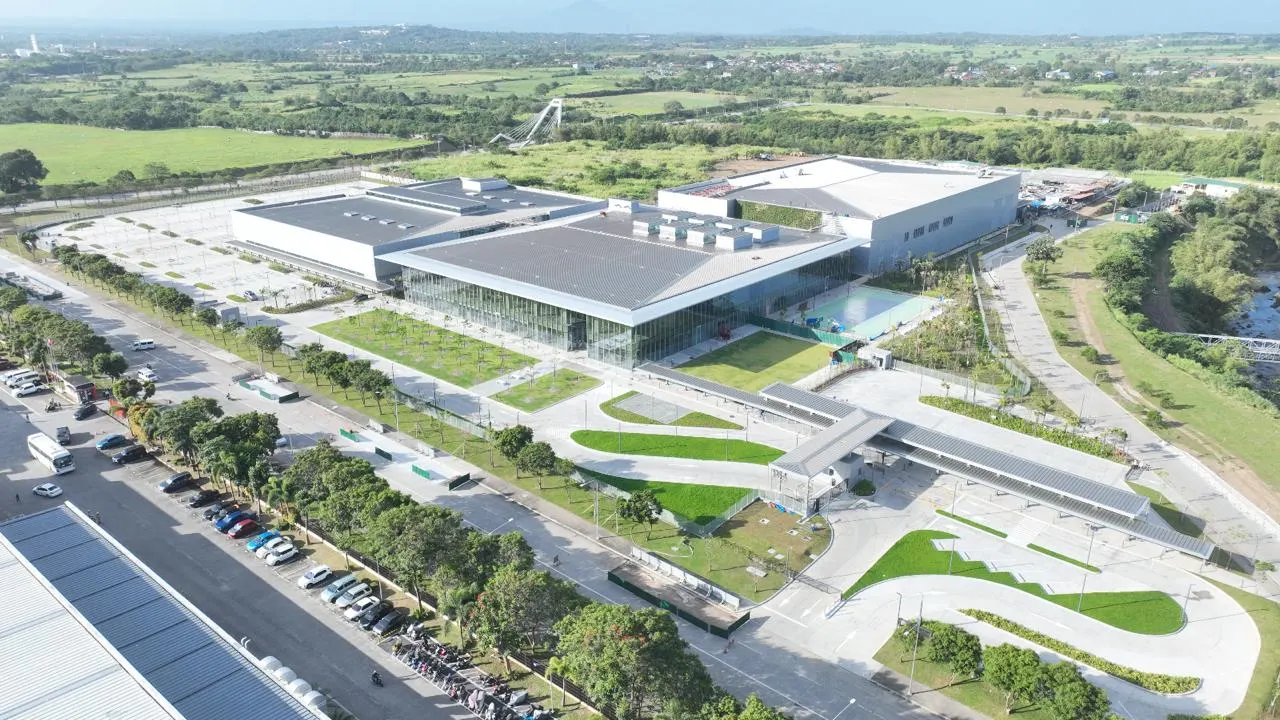 A completed flagship corporate campus landscape, Batangas
What counts as a corporate or developer landscape project?
In practice, this segment covers a wide range of property types: master-planned residential developments (subdivisions, mixed-use townships), corporate offices and industrial parks, hotels and resorts, institutional campuses, and high-rise podium or planter-box landscaping. What they share is scale, multiple stakeholders (developer, GC, architect, facilities team), and a requirement that the landscape contractor can be planned around — fixed mobilization dates, phased handovers, defined maintenance periods, and documentation that satisfies a procurement or compliance process.
MEG has delivered 250+ projects of this kind and supplied 10,000+ trees, with active and past relationships spanning corporate developers, industrial estates, and institutional campuses across Metro Manila, Cavite, Laguna, Batangas, Bulacan, and Pampanga.
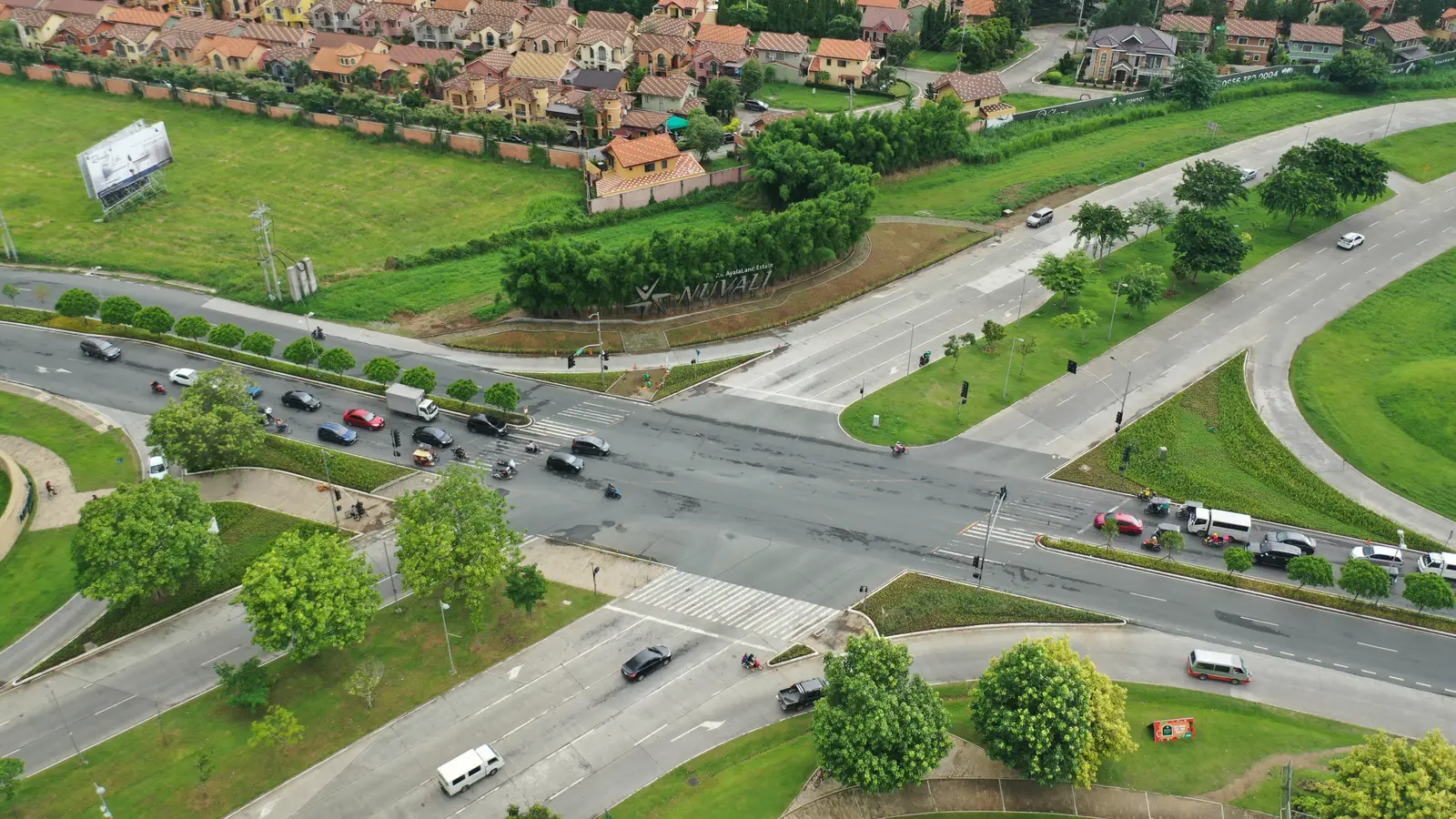 A completed corporate gateway landscape, Nuvali, Laguna
Why does MEG’s own-nursery model matter to developers and GCs?
Most landscape contractors buy plant material from growers or brokers as each project is awarded — which means stock availability, size, and health are outside their control, and lead times can run from weeks to months depending on species and season. MEG grows its own material on a 32-hectare farm in Calauan, Laguna, plus a second nursery at its Silang, Cavite headquarters.
That changes the risk profile for a developer in three concrete ways: stock is reserved for the project the moment the contract is signed (not sourced after), the contractor controls acclimatization and quality before planting rather than inheriting whatever the market has on hand, and there is no exposure to a third-party supplier’s stock-outs or price swings mid-project. The full comparison against market-sourced plant supply is covered in Nursery-Grown vs. Market-Sourced Plants.
Owning the growing operation also means MEG controls plant quality before it ever reaches a truck: species are propagated and raised under known conditions, sized and pruned to specification, and acclimatized to outdoor site conditions before delivery — rather than arriving with an unknown growing history the way brokered market stock does. For a facilities or procurement team evaluating vendors, that difference shows up later as fewer early-mortality replacement claims and a shorter punch list at turnover.
How fast can MEG mobilize after Notice to Proceed?
One week. Because plant material is already growing on MEG’s own farm rather than being ordered in after award, there is no supplier lead time standing between Notice to Proceed and boots on site. For developers managing tight construction schedules or GCs sequencing multiple trades into a narrow handover window, that compresses one of the usual bottlenecks in a landscape scope out of the critical path.
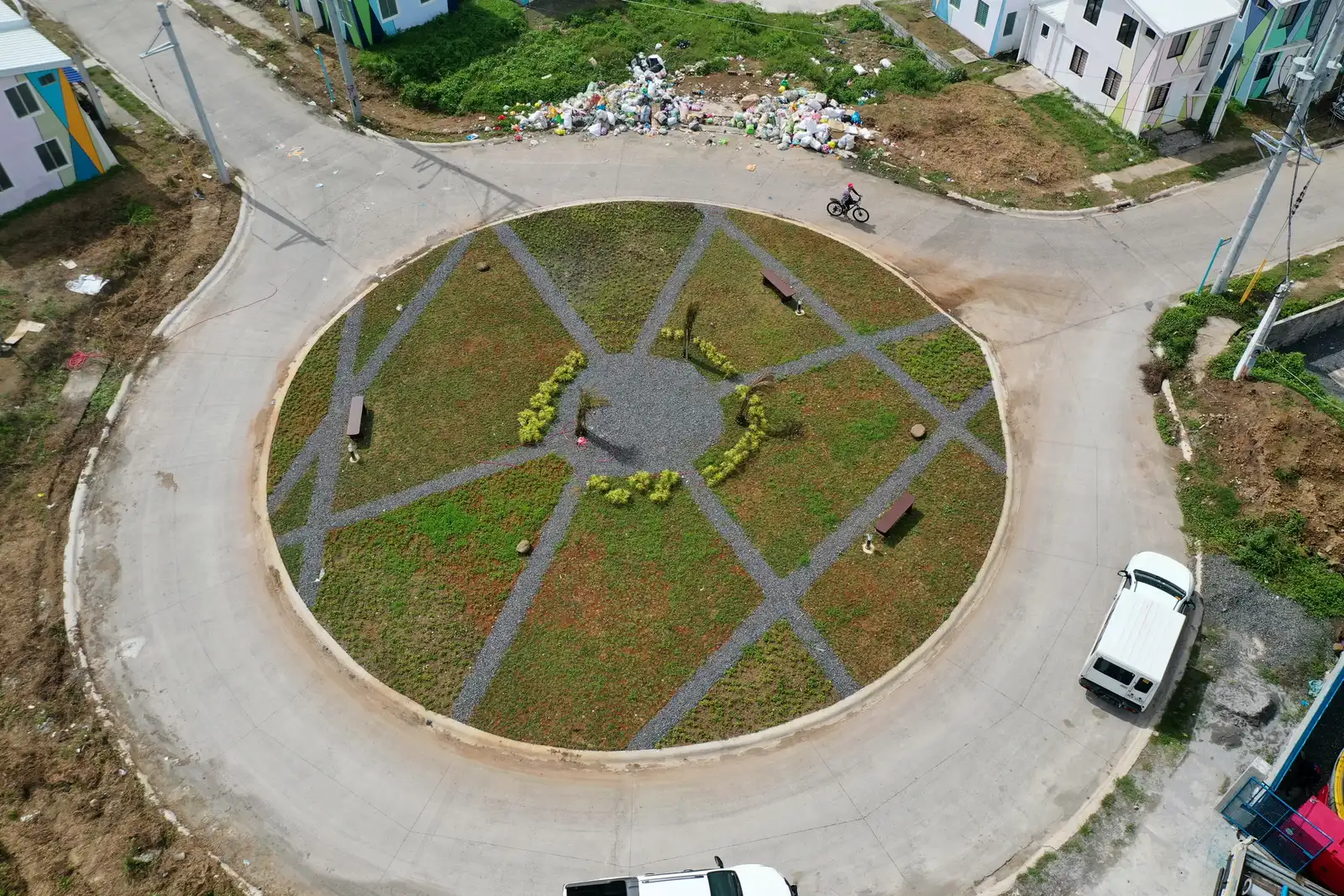 A completed master-planned community landscape, Raemulan Lands
What does the design phase look like?
MEG’s design work is led in-house by a Licensed Landscape Architect, from concept and master planning through construction documentation. For corporate and developer clients this typically means working from architectural and site plans already in progress, aligning planting and hardscape zones with civil and MEP drawings, and producing a plant palette and layout that a procurement or design-review committee can approve before construction pricing is finalized. Where a project needs an early budget number before committing to full design, MEG runs preliminary budgetary estimates.
In practice, design typically moves through a concept layout and plant palette first — enough for a developer or design-review committee to sign off on direction — followed by construction documentation once the layout is approved: detailed planting plans, hardscape and grading details, irrigation zoning, and the specifications a GC or subcontractor needs to build from. On institutional or LEED-targeting campuses, irrigation zoning and non-potable water strategy are worked out at this stage, not added afterward — see LEED-Aligned Irrigation in the Philippines for how that’s approached.
What does construction look like once mobilization begins?
Once mobilized, MEG sequences work by trade and by zone: site preparation and soil/substrate buildup first (shrub beds, groundcover areas, and tree pits each require different depths and buildup), followed by hardscape and structural elements, irrigation rough-in and testing, and planting last, so newly installed material isn’t exposed to ongoing construction traffic. On multi-floor or multi-zone properties — a high-rise podium or a phased campus, for example — this sequencing is planned zone by zone so earlier zones can be signed off and handed over while later zones are still under construction, rather than holding the entire scope to one single completion date.
Quality control runs through the build, not just at final inspection: plant material is checked against the approved palette and specification before installation, and structural planter or podium work is verified against drainage and waterproofing detail before it’s covered up and inaccessible. See Planter Box Construction, Drainage & Waterproofing for how that specific buildup is documented.
How does MEG handle softscape, hardscape, and irrigation together?
Because design, softscape, hardscape, and irrigation sit under one team, there is no handoff risk between a planting contractor and a separate hardscape or irrigation subcontractor — coordination on levels, drainage, and planting sequence happens inside one scope of work instead of across contract boundaries. This matters most on projects with structural planters, podium decks, or basement waterproofing under softscape areas, where a construction error in one trade becomes a warranty dispute for another. See Planter Box Construction, Drainage & Waterproofing for how MEG builds and documents that buildup, and LEED-Aligned Irrigation in the Philippines for how irrigation scope is designed on institutional and LEED-targeting campuses.
What documentation and submittals should a developer or GC expect?
Corporate and institutional projects typically require a defined submittal package before and during mobilization — method statements, job hazard analyses, material compliance and plant nomination sheets, safety programs, and a construction schedule, among others, depending on the GC’s or developer’s requirements. MEG produces these as a matter of course rather than as a special request, along with progress documentation during construction and a formal handover package at completion. That paper trail matters twice: it’s usually a contractual or procurement requirement to mobilize in the first place, and it’s what protects both parties if a defect-liability or warranty question comes up later. See Landscape Maintenance Contractor Handover for what a complete handover package should include.
How is pricing and budgeting handled for corporate and developer projects?
Pricing typically follows one of two paths depending on how far along the project is. Early-stage projects — before full design is locked — can get a preliminary budgetary estimate to establish a realistic range before committing further design spend; MEG’s budget calculator is built for exactly this stage. Later-stage projects — where a design and plant schedule already exist — get a full, itemized Bill of Quantities priced against the actual specification, so procurement can compare it against other bids line by line rather than working off a rough range.
What is MEG’s project capacity?
MEG runs 2 large projects and 6 small projects concurrently across its teams, supported by 3 offices nationwide and the 32-hectare farm behind them. This is a practical planning figure for developers sequencing multi-phase rollouts or coordinating a start date against other trades — ask for current capacity before locking a mobilization date, since it changes as projects move through the pipeline.
Is MEG PCAB accredited?
MEG’s PCAB (Philippine Contractors Accreditation Board) accreditation renewal is in process. Ask for current status and category directly before contract award — accreditation status is worth confirming with any contractor rather than assuming from a past conversation or a website.
Where to start
If you’re scoping a corporate, developer, or institutional landscape package, the next step is a site visit — every engagement starts with a free ocular consultation. Book a consultation, run your project through the budget calculator for an early range, or reach us directly at inquiry@meglandscaping.com / +63 928 551 0587.
Frequently asked questions
What is a corporate or developer landscape services company?
It is a contractor that handles landscape design, construction, and maintenance for commercial, institutional, and master-planned developments — typically working directly with developers, general contractors, or facilities management teams rather than individual homeowners. Mother Earth Gardens has done this since 2009, combining design, softscape, hardscape, irrigation, and maintenance under one team.
How fast can a landscape contractor mobilize after Notice to Proceed?
It depends on whether the contractor owns its plant stock. MEG mobilizes within one week of Notice to Proceed because plant material is grown on its own 32-hectare nursery and reserved for the project the moment the contract is signed — there is no market-sourcing lead time to wait out.
Does MEG work directly with developers, or only through general contractors?
Both. MEG holds long-term direct relationships with developers such as Greenfield Development Corporation (15 years) and supply relationships with Makati Development Corporation (15 years), and also works as a specialist subcontractor under general contractors on corporate and hospitality fit-outs.
What is MEG's project capacity?
MEG runs 2 large projects and 6 small projects concurrently across its teams, supported by 3 offices nationwide and a 32-hectare farm. This is a practical planning figure for developers sequencing multi-phase rollouts — ask about current capacity before locking a start date.
Is MEG PCAB accredited?
MEG's PCAB accreditation renewal is in process. Ask for current status and category before contract award.
Planning a project?
Get a realistic budget for your site, or request a visit from our team.