Nursery-Grown vs. Market-Sourced Plants: What Developers Should Know
By Paul V. Mascarinas · July 11, 2026
Nursery-grown plants outperform market-sourced plants on four counts that matter most to a developer or GC: the stock can be reserved for a project the moment a contract is signed, the grower controls quality and acclimatization before a single plant reaches site, there is no exposure to a third-party supplier’s stock-outs or price swings, and any replacement warranty is backed by a party that actually controls the supply. Mother Earth Gardens grows its own plant material on a 32-hectare farm in Calauan, Laguna, and a second nursery at its Silang, Cavite headquarters — which is the foundation of its 1-week mobilization from Notice to Proceed and 6-month plant replacement warranty.
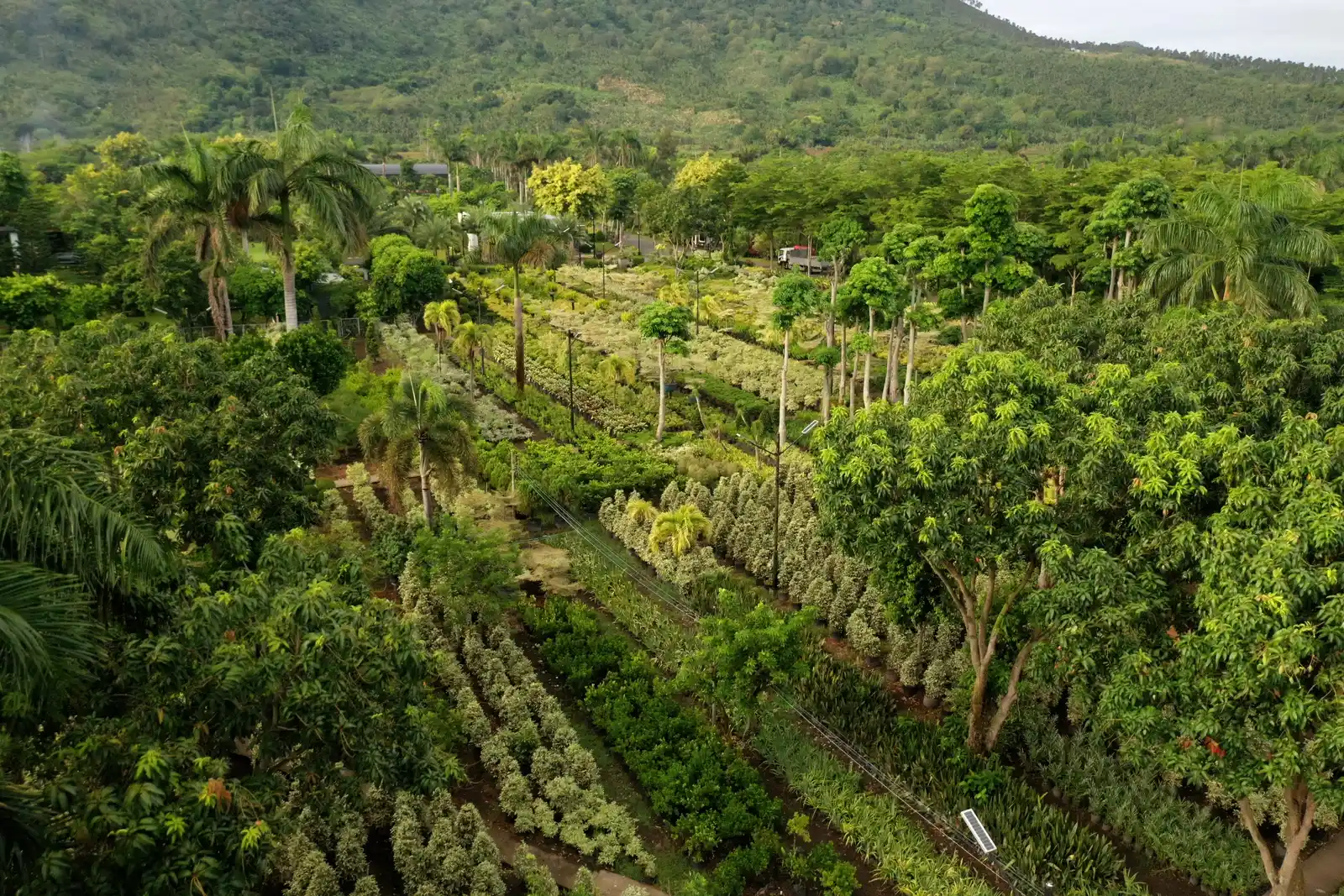 Aerial view of MEG's own 32-hectare nursery — stock grown ahead of demand, not sourced after award
1. Stock reservation: plants are set aside before construction even starts
When a landscape contractor owns its nursery, plant material for an awarded project can be reserved and tagged the moment the contract is signed — not sourced afterward. That removes one of the biggest scheduling risks on a construction timeline: waiting on a third-party grower to have the right species, size, and quantity available when the landscape phase actually arrives, months after the contract was signed. Reserved stock is also why MEG can commit to mobilizing within one week of Notice to Proceed — the plants are already growing, not still being sourced.
 A MEG delivery truck loading reserved stock — plants move straight from grower to site, not through a broker
2. Quality and acclimatization control from propagation to planting
A nursery that grows its own stock controls every stage of a plant’s life before installation: propagation method, growing medium, fertilization, pruning, and — critically for tropical species being moved into a new site — acclimatization to the light, wind, and soil conditions it will actually face. Market-sourced plants, by contrast, arrive with an unknown growing history. A contractor buying on the open market has no visibility into how a plant was raised, how many times it changed hands, or how much stress it absorbed in transit before reaching the truck that delivers it to site. That unknown history is a leading cause of early plant failure after installation — failure that shows up as a warranty claim, not a design flaw.
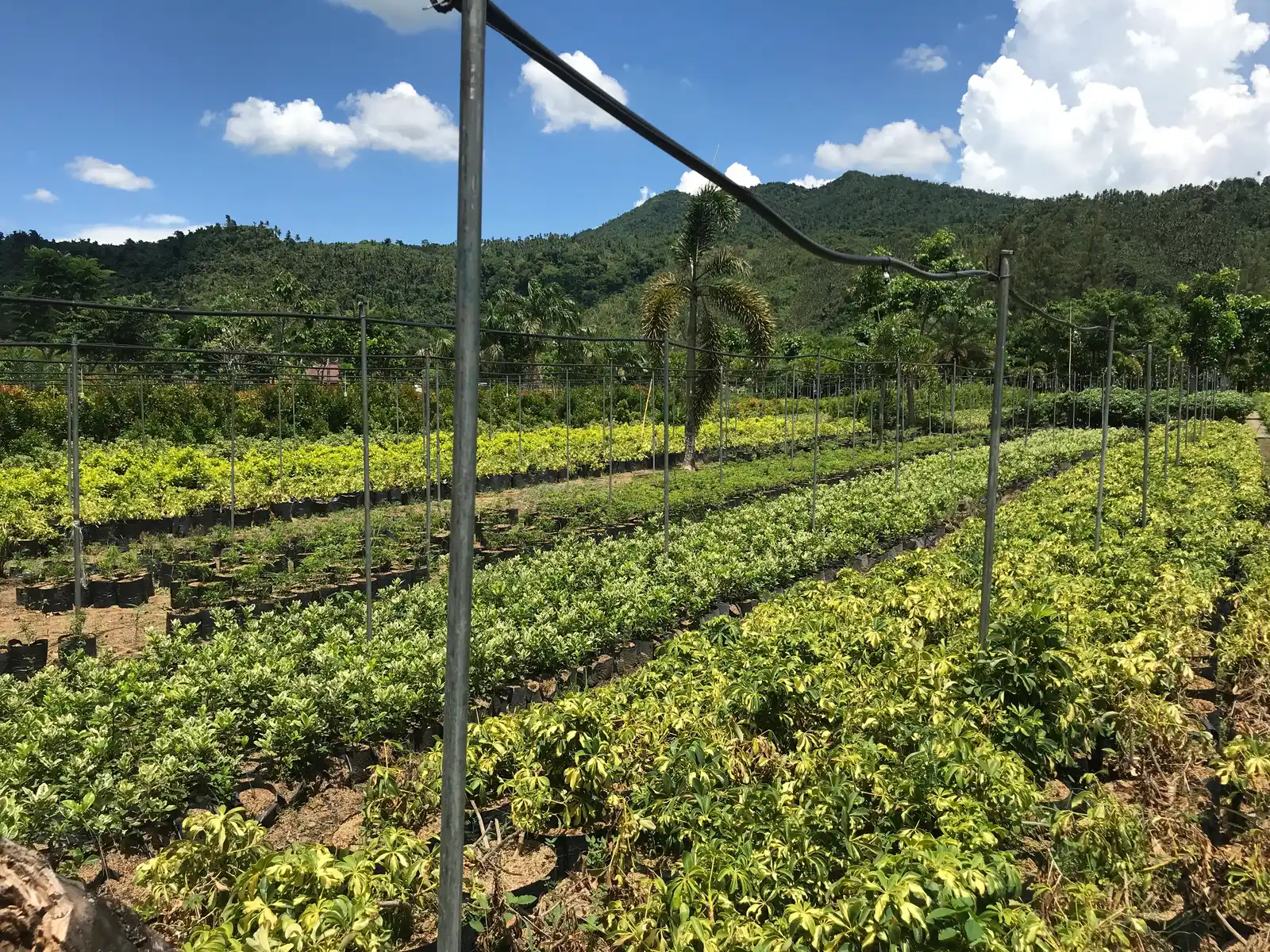 Rows of nursery-grown stock, raised under known conditions from propagation to planting size
3. No supply-chain gaps — availability isn’t dependent on someone else’s stock
Market sourcing means a contractor’s delivery commitment is only as reliable as its suppliers’ actual inventory on the day it’s needed. Species availability shifts seasonally, popular sizes sell out on active developments competing for the same stock, and price moves with scarcity. Owning the supply chain removes that dependency: MEG’s own-farm model means plant availability for a signed project isn’t contingent on a broker’s inventory or a third party’s harvest schedule. For species-level planning guidance on what grows reliably in Philippine conditions, see Tropical Plants & Garden Design for Philippine Homes.
4. Warranty backing that the grower can actually stand behind
A plant replacement warranty is only as strong as the party issuing it. A contractor that sources from third-party growers is warranting material it did not raise and has limited leverage to replace quickly if a batch fails — it has to go back to the market again, on the same lead-time terms that created the original risk. MEG backs installed plant material with a 6-month replacement warranty, made practical by the fact that replacement stock is already growing on its own farm rather than needing to be re-sourced from scratch. Full warranty and retention terms are covered in Living Plants, Retention & Warranty Terms.
What should a developer or GC ask a contractor about plant sourcing?
Before awarding a landscape scope, it’s worth asking directly: Does the contractor own or lease growing land, or does it broker plant material? How is stock reserved once a contract is signed, and is that in writing? What is the replacement warranty period, and who is actually growing the replacement stock if a claim is made? These questions surface the difference between a contractor with a real supply chain and one reselling whatever the market has that week. See How Developers Choose a Landscape Partner for the fuller vetting checklist.
Where does nursery stock fit into MEG’s overall project delivery?
Nursery ownership is the foundation MEG’s design-build-maintain model is built on — it’s what makes fast mobilization, warranty terms, and maintenance replacement stock possible without relying on outside suppliers. See Corporate and Developer Landscape Services for the full model, or browse the working nursery directly at /nursery.
Want to see current nursery stock and availability for your project’s plant palette? Book a consultation to review species, sizes, and reservation timelines.
Frequently asked questions
What's the difference between nursery-grown and market-sourced plants?
Nursery-grown plants are propagated and raised by the landscape contractor on its own farm, under its own quality control, and reserved for a specific project on contract signing. Market-sourced plants are purchased from third-party growers or brokers after a project is awarded, subject to whatever stock, size, and condition happen to be available at that time.
Why does stock reservation matter for a construction schedule?
Reserving stock at contract signing means the plant material a project needs is already set aside and growing before construction even reaches the landscape phase — removing sourcing lead time as a scheduling risk and supporting fast mobilization after Notice to Proceed.
Can market-sourced plants still come with a warranty?
Sometimes, but a warranty is only as reliable as the party backing it. A contractor sourcing from a third-party grower has less direct knowledge of a plant's growing history and less control over its condition before installation, which weakens its ability to stand behind a replacement warranty.
Are nursery-grown plants more expensive than market-sourced plants?
Not necessarily — owning the supply chain removes broker markups and reduces the risk-driven price volatility that comes with sourcing scarce or seasonal species on short notice. Get a project-specific comparison via the budget calculator.
Does MEG only use its own nursery stock, or does it also source from the market?
MEG's primary supply is its own 32-hectare nursery in Calauan, Laguna, plus its Silang, Cavite headquarters nursery. This is what supports stock reservation on signing and 1-week mobilization from Notice to Proceed.
Planning a project?
Get a realistic budget for your site, or request a visit from our team.