Landscaping a Resort or Hospitality Property in the Philippines
By Paul V. Mascarinas · July 11, 2026
Landscaping a resort or hospitality property in the Philippines differs from standard commercial landscaping in four ways: the landscape is part of the guest experience and directly affects perceived property value, coastal sites face salt spray and saline soil that narrow the usable plant palette, construction or renovation usually has to be phased around a property that stays open and operating, and ongoing maintenance has to run at higher intensity because guest-facing zones can’t be allowed to visibly decline between scheduled visits. Mother Earth Gardens has completed resort, hotel, and events-venue landscaping across these conditions as part of its national project coverage.
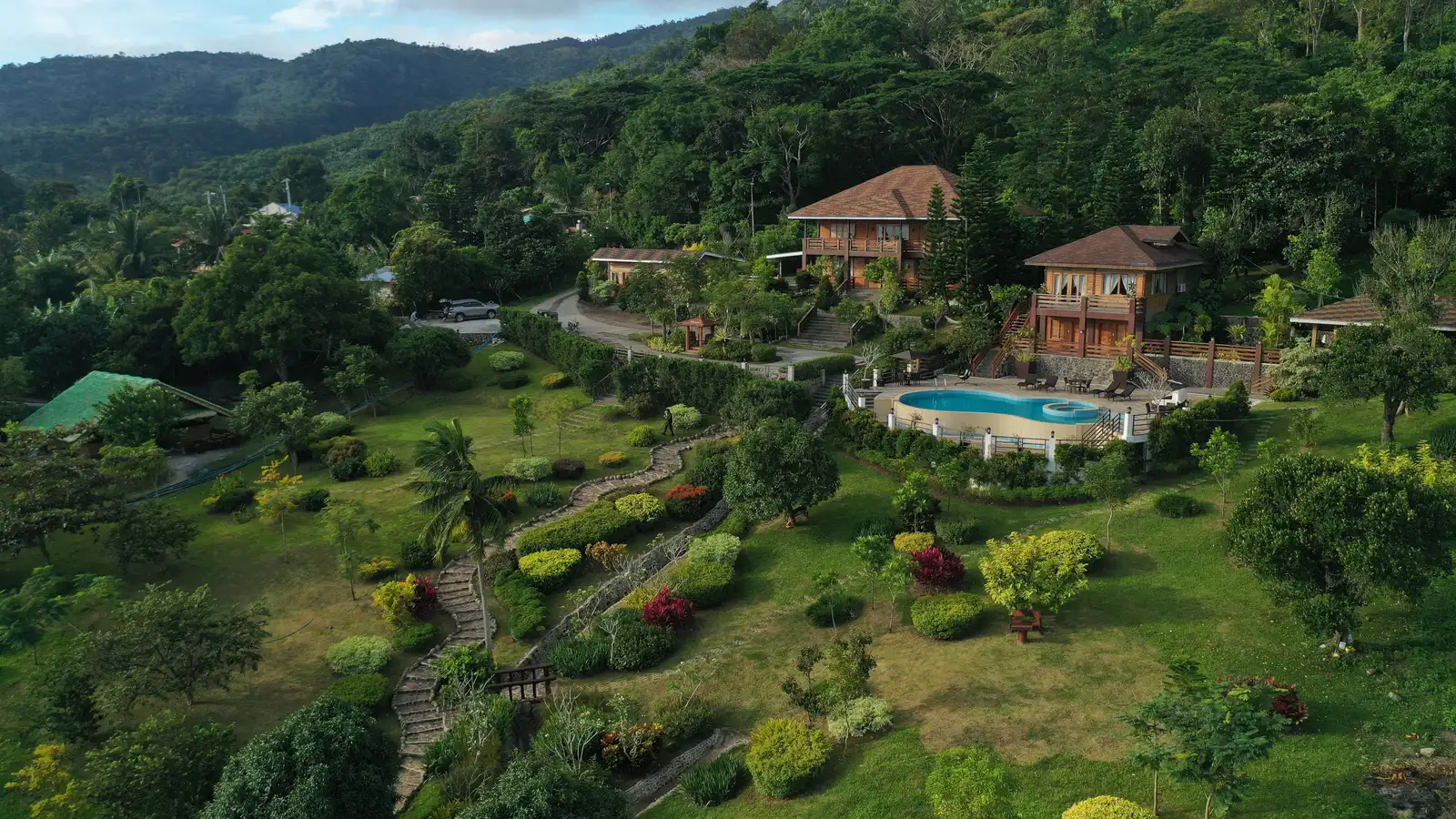 A completed resort landscape, San Pablo, Laguna
Why does guest experience change how a resort landscape is designed and built?
On a corporate office or industrial site, landscaping is functional — it needs to look presentable and low-maintenance. On a resort or hotel, the landscape is part of what a guest is paying for: it shapes first impressions at arrival, frames photos guests post and share, and signals property quality at every turn from lobby to pool deck to room walkways. That changes design priorities toward sightlines, seasonal color, shade at gathering points, and planting that photographs well — not just planting that survives. It also raises the cost of a visible failure: a dead hedge or bare patch in a guest-facing zone is a service complaint, not a maintenance backlog item.
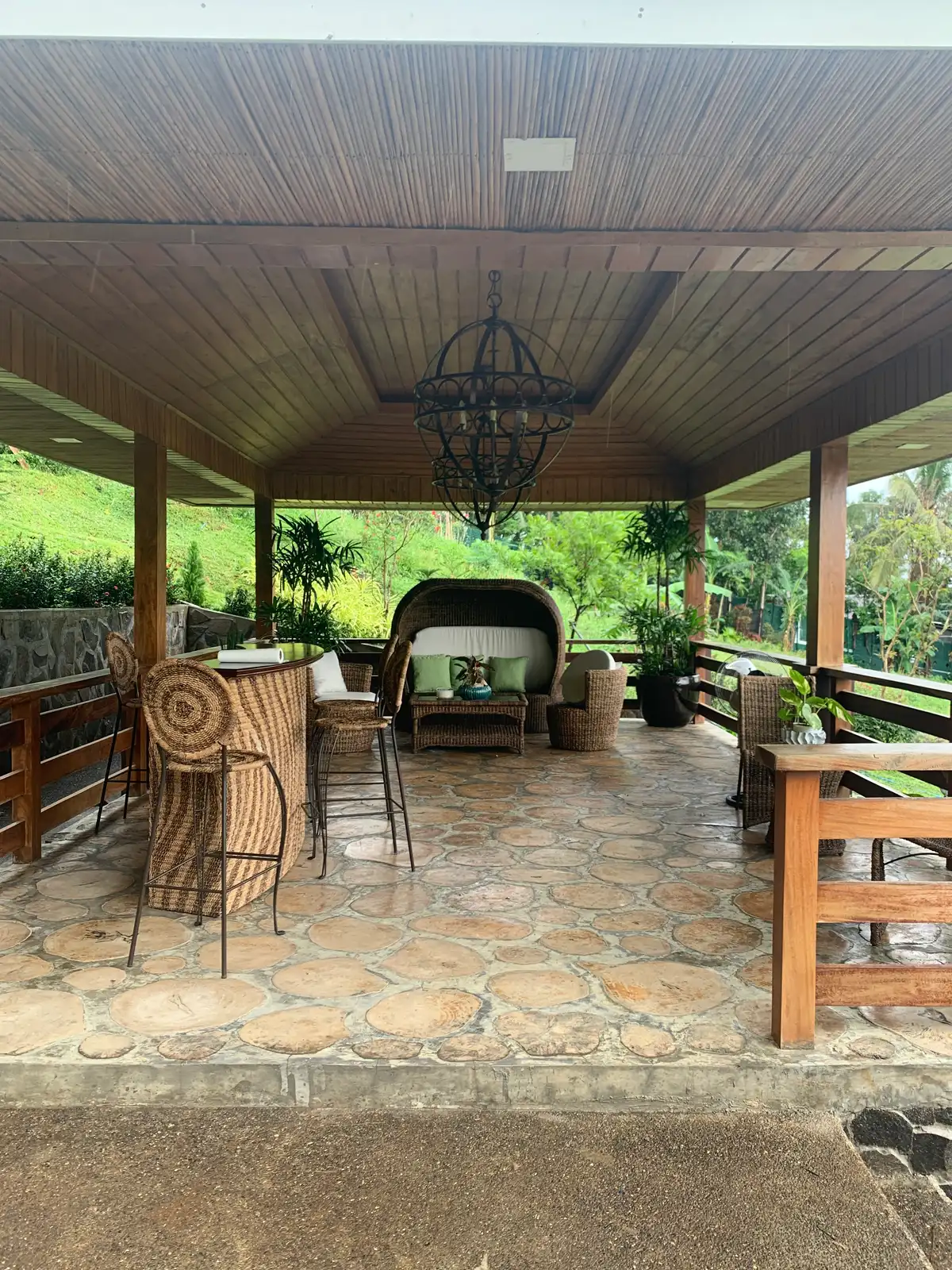 Outdoor lounge pavilion designed as part of the guest experience, San Pablo, Laguna
How does coastal exposure affect plant and material selection?
Coastal and beachfront resort sites bring salt spray, wind exposure, and often sandy or saline soil — conditions that eliminate many standard ornamental species from consideration and push design toward salt-tolerant, wind-hardy tropical planting. Hardscape materials near the shoreline also need to account for corrosion and moisture exposure differently than an inland commercial site would. Because salt tolerance and microclimate vary meaningfully even within a single property — a beachfront row versus a set-back courtyard, for example — species selection should follow a site-specific assessment rather than a generic coastal plant list. General species guidance for Philippine conditions is covered in Tropical Plants & Garden Design for Philippine Homes.
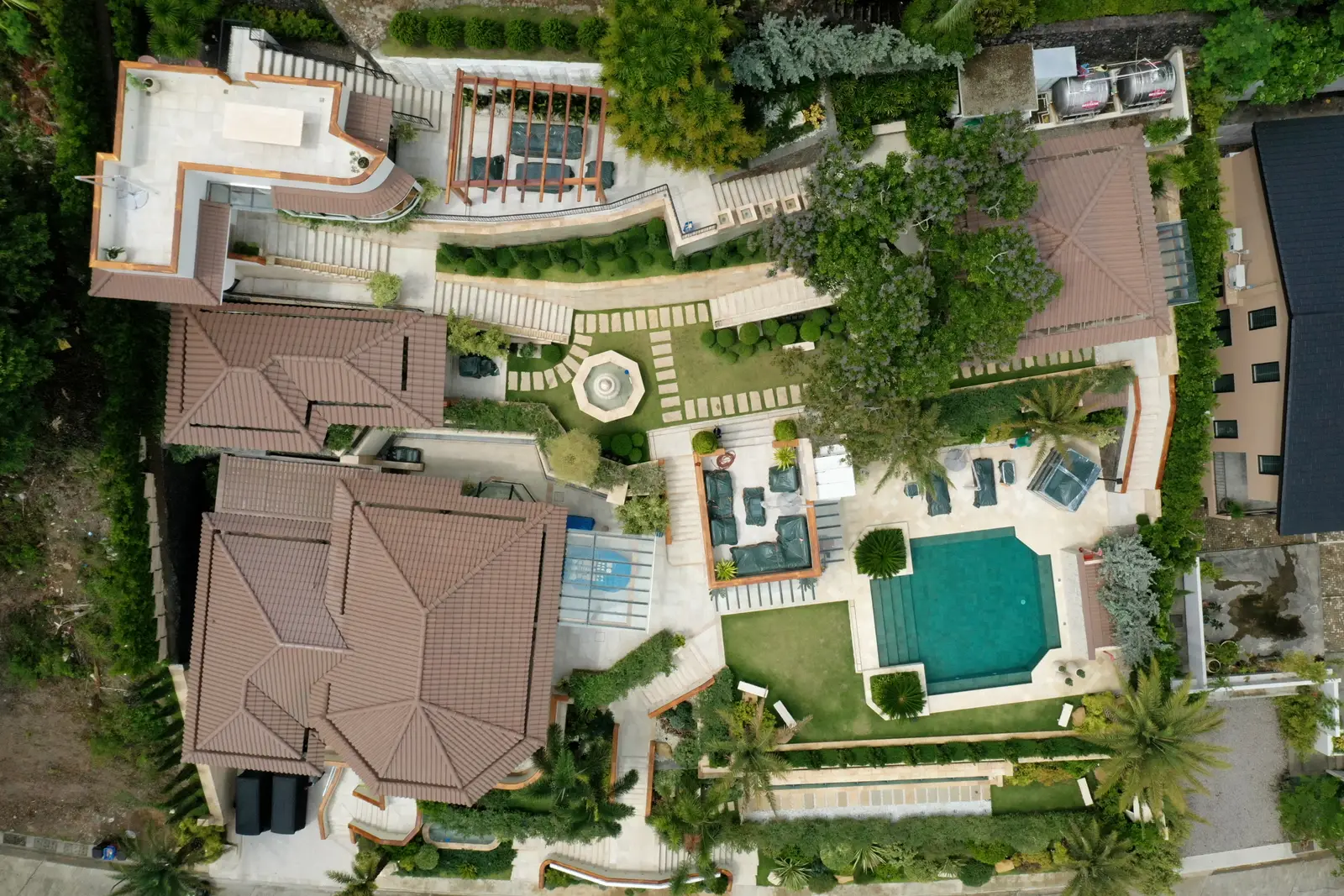 Aerial view of a finished estate landscape, Peninsula de Punta Fuego, Nasugbu
How is construction or renovation phased around a resort that stays open?
Unlike a new-build corporate site, resort landscaping work — especially renovation or a phased upgrade — frequently has to happen while the property continues welcoming guests. That means sequencing work zone by zone rather than opening the whole site at once, scheduling the most disruptive activities (soil excavation, heavy equipment movement, chemical application) during lower-occupancy periods, and maintaining a clear physical and visual separation between active construction areas and guest-facing zones. In practice this means sequencing planter and softscape work zone by zone behind screened work areas, and coordinating access windows with the property’s operations team rather than working to a single fixed schedule. This kind of sequencing needs to be planned into the contract and schedule from the start, not improvised on-site.
Why does maintenance intensity matter more at a resort than a typical commercial property?
A corporate campus landscape can tolerate a missed maintenance cycle without much consequence — a typical office property is inspected periodically, not scrutinized daily by paying customers. A resort cannot: a wilting planter or patchy lawn is visible to every guest who walks past it that day, and it directly affects how the property is perceived and reviewed. That pushes resort maintenance programs toward tighter visit frequency and faster corrective response than a standard commercial SLA. See What Is Landscape Maintenance and What Does an SLA Cover? for what a maintenance contract should specify, including MEG’s 72-hour corrective response standard — which matters even more on a guest-facing property than an office park.
What about planters, pool decks, and structural landscape elements?
Resort properties frequently combine landscaping with structural elements — raised planters, pool-deck greenery, rooftop or podium gardens — that require the same waterproofing and drainage discipline as any structural planter box, but under harsher exposure conditions (pool chemicals, constant irrigation, foot traffic). See Planter Box Construction, Drainage & Waterproofing for how that buildup should be specified and verified.
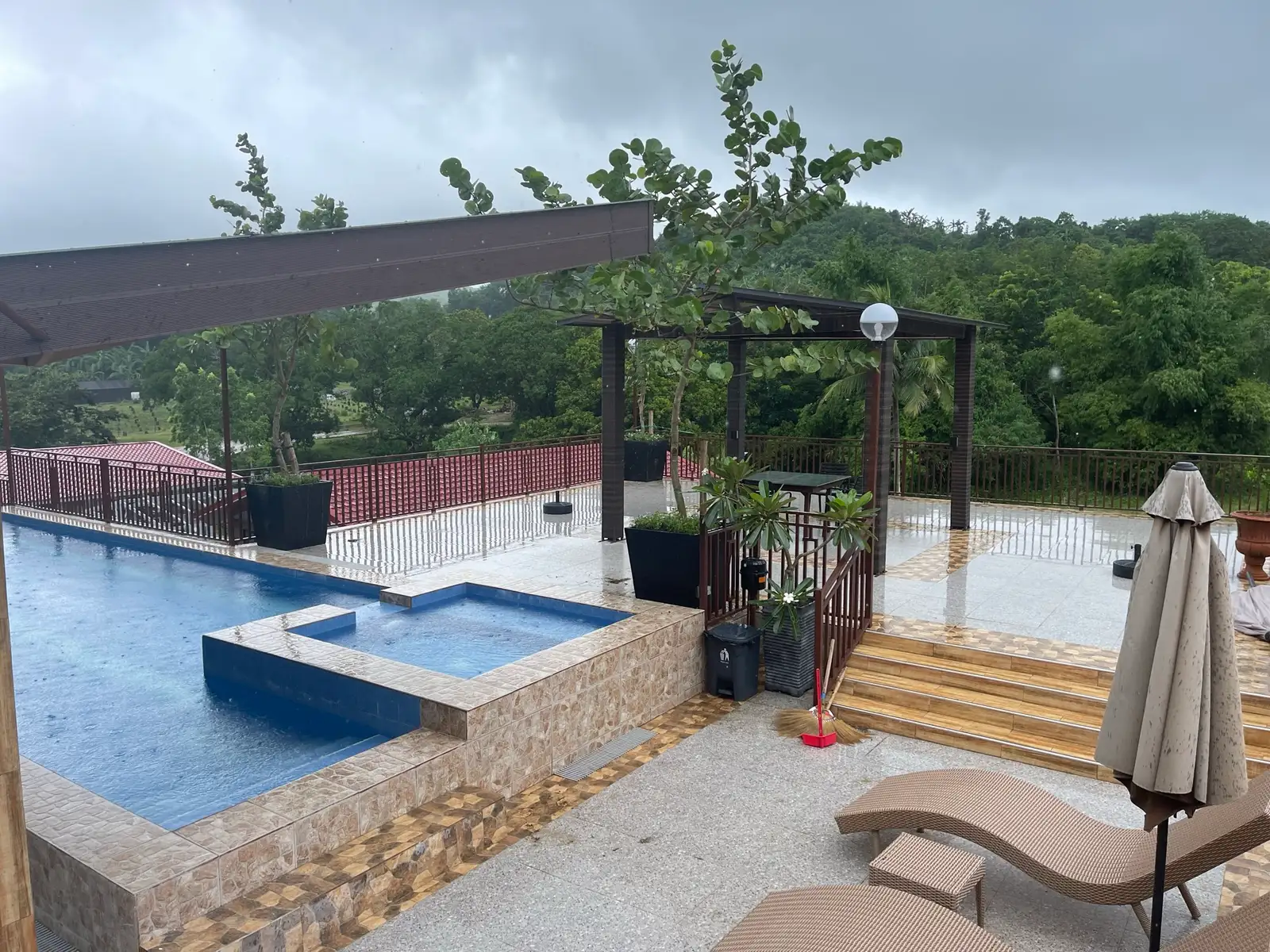 Pool deck and pergola planting, Nasugbu, Batangas resort project
How does resort landscaping fit into MEG’s broader service offer?
Resort and hospitality work draws on the same design-build-maintain model MEG applies to corporate and developer projects — in-house design, own-nursery plant supply suited to coastal and tropical conditions, and a maintenance program built for guest-facing standards. See Corporate and Developer Landscape Services for the full model, and Our Work for a sample of completed projects across property types.
Planning a resort or hospitality landscape project — new build, renovation, or a maintenance program upgrade? Book a consultation to scope site conditions, phasing, and a maintenance standard that matches your guest experience.
Frequently asked questions
What makes resort or hospitality landscaping different from other commercial landscaping?
Four factors: the landscape is part of the guest experience and revenue, not just site aesthetics; coastal properties face salt spray and sandy or saline soil that limit plant selection; construction or renovation often has to be phased around a property that stays open to guests; and maintenance intensity is higher because guest-facing areas can't be allowed to visibly decline between visits.
Can resort landscaping be done while the property stays open to guests?
Yes, with phased sequencing — working zone by zone, scheduling disruptive work (soil work, heavy equipment, spraying) during low-occupancy periods, and maintaining clear separation between active work areas and guest-facing zones.
What plants tolerate coastal or salt-exposed conditions in the Philippines?
Species selection depends on exact exposure and soil salinity at the specific site — a site assessment is the right first step rather than a generic list, since salt tolerance varies significantly by microclimate even within one property.
How often does a resort landscape need maintenance compared to a typical commercial property?
Resort landscapes generally need more frequent maintenance visits than a standard commercial property because guest-facing zones have to stay presentable continuously, not just pass periodic inspection — worn turf, dead blooms, or pest damage are visible to paying guests immediately.
Does MEG have resort or hospitality landscaping experience?
Yes — MEG has completed resort, hotel, and events-venue landscaping in the Philippines. Specific current or active engagements are kept confidential per client agreements; ask for relevant examples during a consultation.
Planning a project?
Get a realistic budget for your site, or request a visit from our team.