How to Plan a Garden for a New Home
By Paul V. Mascarinas · July 11, 2026
Planning a garden for a new home comes down to five steps, in order: assess the site’s sun, soil, and drainage; set a budget and a style direction; zone the space by how you’ll actually use it; select plants suited to the Philippine climate; and plan for the maintenance the garden will need once it’s in the ground. Skipping the order — picking plants before zoning, or zoning before understanding the site — is the most common reason new home gardens underperform their design. Here’s each step in detail.
Step 1: How Do You Assess Your Site Before Planning a Garden?
Walk the property at different times of day before drawing anything. Note which areas get full sun, which are shaded by the house or neighboring structures, and how that shifts between morning and afternoon — a spot that reads as “shaded” at 9am can be in direct sun by 3pm.
Check three more things while you’re at it:
- Drainage and grading. Where does water actually go during a heavy downpour? In a monsoon climate, this matters more than almost any other site factor.
- Soil type. Subdivision lots often sit on clay-heavy fill; some sites are sandier or closer to laterite. This affects what will establish easily versus what will need soil amendment.
- Existing constraints. Utility lines, septic fields, easements, and any structures already on-site (walls, existing trees, drainage channels) all narrow what’s possible before a single plant is chosen.
Step 2: How Do You Set a Budget and Style for a New Garden?
Set a rough budget range before falling in love with a specific design — style decisions made against an unknown budget usually get reworked later, which costs more than planning around a number from the start. Use the budget calculator to get a preliminary range based on your lot size and the scope you’re considering.
Style follows budget, not the other way around. A formal, hedge-heavy design with heavy hardscaping costs and maintains differently than a looser, foliage-forward tropical planting. Decide early which direction fits both your taste and your ongoing maintenance appetite — this connects directly to the low-maintenance-versus-high-color trade-off covered in the pillar guide.
 A modern, low-hedge style direction — agave and potted accents on a residential terrace
Step 3: How Do You Zone a Garden by Use?
Divide the property by function before by plant type: entry and arrival, outdoor living and gathering, service and utility areas, and any private or quiet zones. Each zone has different requirements — an entry needs presentable structure and low upkeep since it’s seen daily, while a private corner can carry more experimental or higher-maintenance planting.
Zoning also determines where hardscape (patios, walkways, walls) needs to go before planting starts, since hardscape defines the edges each planting zone works within.
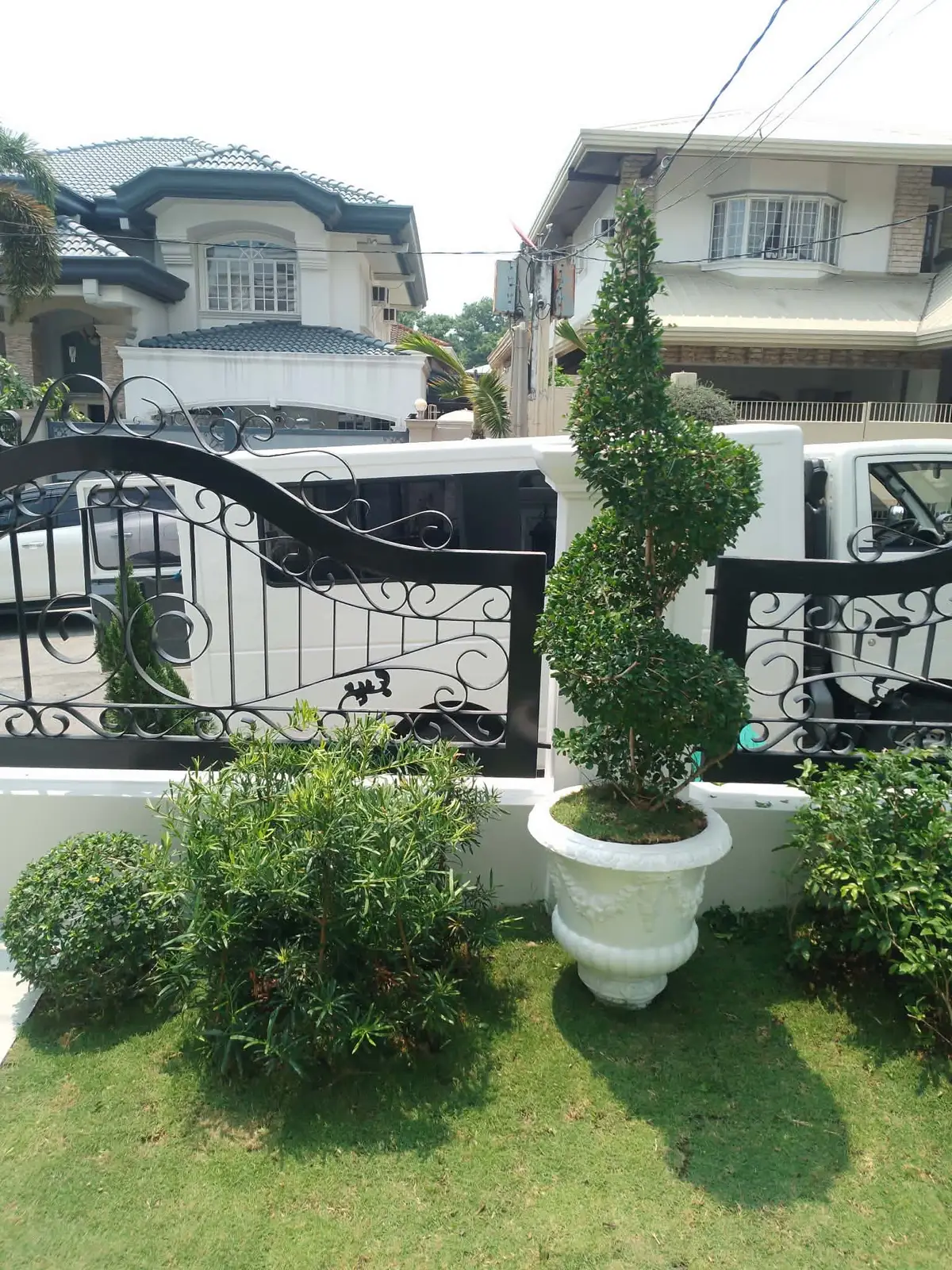 Entrance zoning in practice — structured, low-upkeep planting at a residential gate, seen daily
Step 4: How Do You Select Plants That Fit the Philippine Climate?
Choose species based on each zone’s actual sun exposure and moisture pattern, not on what looked good at a garden center. This is where the climate realities covered in Tropical Plants & Garden Design for Philippine Homes apply directly — heat tolerance, monsoon drainage, and typhoon wind exposure all narrow the realistic list for your specific site.
For a starting shortlist:
- Structural, low-maintenance planting: see Best Low-Maintenance Plants for a Manila Garden.
- Trees for shade, avenues, specimens, or screening: see Best Trees for Philippine Subdivisions and Estates.
Plant trees first in the installation sequence — they take the longest to reach functional size — followed by hedges and screening, then color and groundcover last.
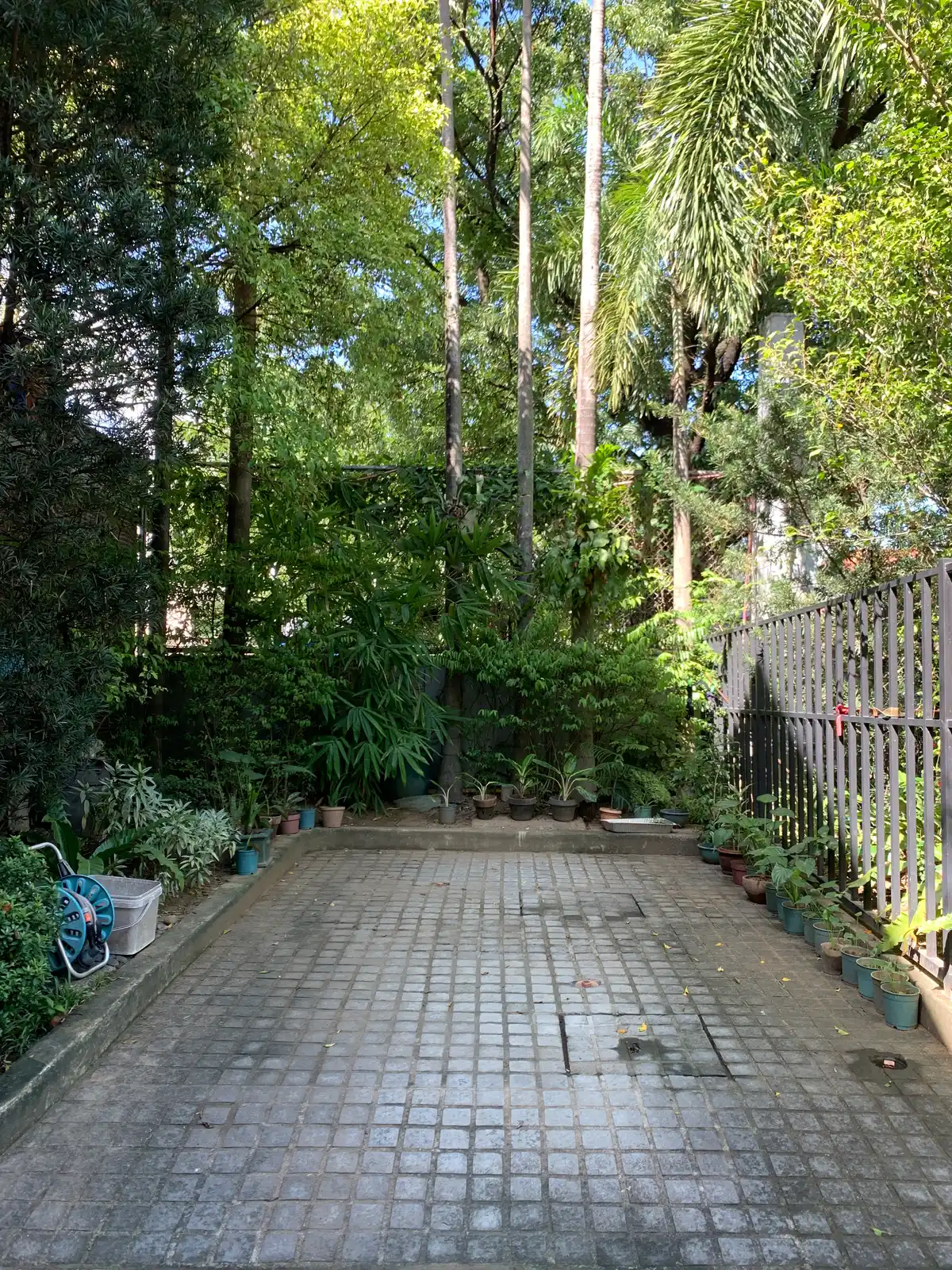 Trees planted first pay off years later — a mature canopy over a residential driveway
Step 5: How Do You Plan for Ongoing Garden Maintenance?
Decide before installation, not after, who is maintaining the garden and how often. A garden designed around low-maintenance structural planting with color concentrated at a few focal points (see Step 2) needs far less ongoing labor than a high-color, high-density planting scheme — factor that into your style decision honestly, based on whether you’re maintaining it yourself or contracting it out.
Build in a watering plan for the first 60–90 days after planting regardless of species, since this establishment window is when even drought-tolerant plants need consistent moisture to root properly.
What’s the Next Step After Planning?
Once you have a rough sense of site, budget, zones, and plant direction, the next move is a site walk with a landscape architect who can turn the plan into a phased, buildable design. Book a consultation to walk your site with MEG’s team, or browse our nursery to see the mature stock available for your project.
Frequently asked questions
What's the first step in planning a new home garden?
Assess the site — sun exposure through the day, drainage and grading, soil type, and existing structures or utility lines. Every later decision, including plant selection, depends on getting this step right first.
How far in advance should I plan my garden before moving in?
Ideally, start design conversations while the house is still under construction or shortly after turnover. Trees need the longest lead time to mature, so the earlier they go in, the sooner the garden reads as established.
Should I install the whole garden at once or phase it?
Phasing is usually smarter, both for budget and for plant establishment. Hardscape and trees go in first, then hedges and screening, then color and groundcover — see our phasing breakdown in the pillar guide.
Do I need a landscape architect to plan a home garden?
For anything beyond container plants on a balcony, yes. A landscape architect matches your zoning and plant selection to your actual site conditions and prevents expensive species-site mismatches later.
How do I estimate the cost of a new home garden before committing?
Use a budget calculator for a preliminary range based on lot size, scope, and style, then get a site-specific number from a consultation once you have a rough plan in mind.
Planning a project?
Get a realistic budget for your site, or request a visit from our team.